
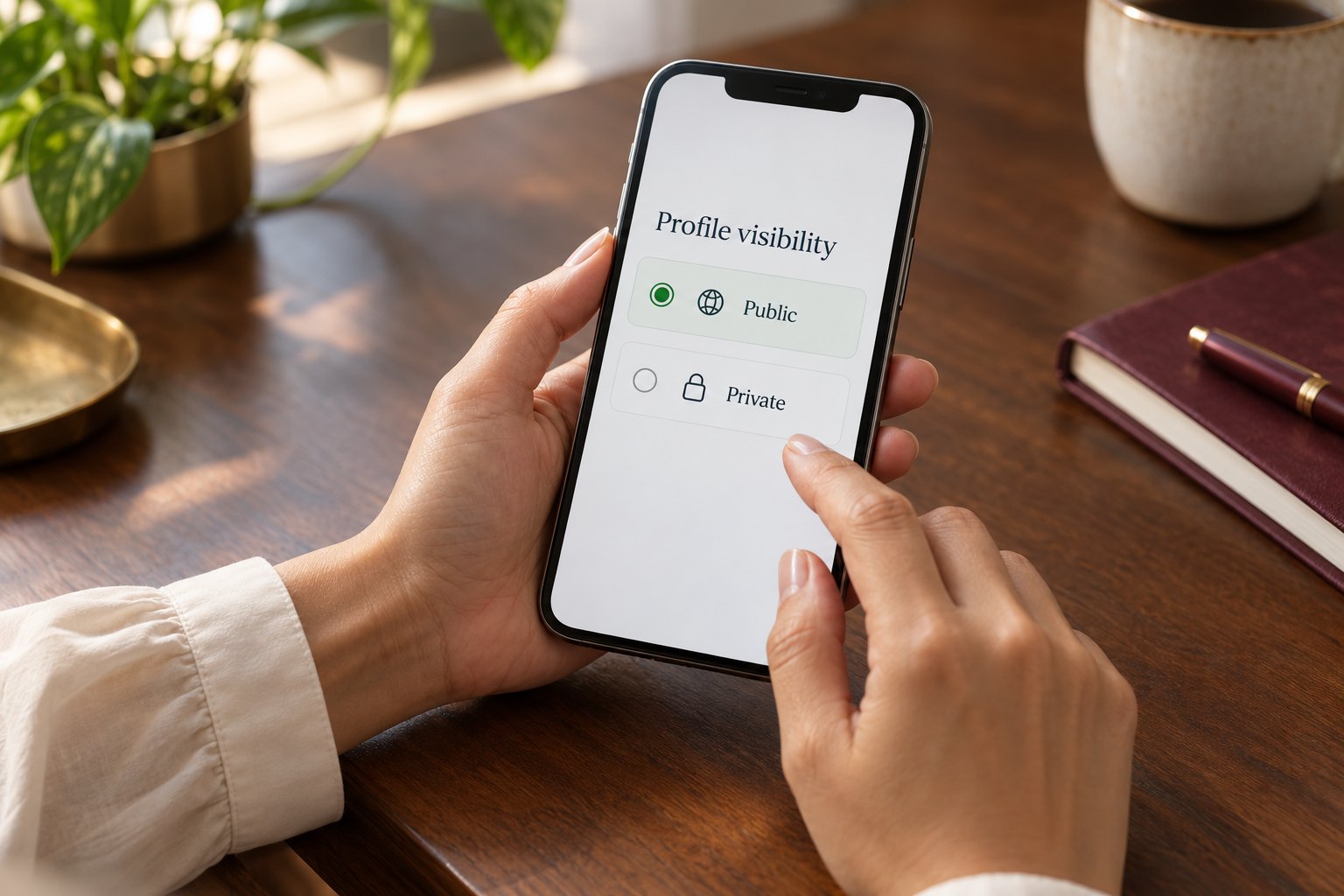
Your online presence deserves the same careful attention as the rest of your visa application. Effective October 1, 2026, the U.S. Department of State expanded online presence review to applicants for I, TN, and TD nonimmigrant visas. Its September 18 announcement directs these applicants to make all social media profiles public or open. [1]
For applicants, the practical task is to identify the instructions that apply, disclose account information accurately, and prepare to explain relevant facts. A professional profile, an old username, or an outdated biography should not be an afterthought when preparing for an interview.
Who is covered by the expansion
The newly added classifications are I for foreign-media representatives, TN for qualifying Canadian and Mexican professionals, and TD for eligible spouses and children of TN professionals. The announcement adds these groups to categories already subject to online presence review, including specified student, exchange-visitor, worker, and family-related classifications. The complete list appears in the State Department announcement. [1]
This is a consular visa announcement. Canadian citizens generally do not need a TN visa to request TN admission, while Mexican citizens do. Family members' visa requirements also depend on citizenship and circumstances. The announcement should not be read as creating a visa requirement for every Canadian TN traveler. Applicants should confirm which process applies to them. [2]
Public profiles and account disclosures are separate requirements
For the newly covered visa applicants, changing profile visibility enables the expanded review. Providing usernames on the application serves a separate purpose. Completing one task does not replace the other. [1]
The social media questions on visa application forms predate this expansion. State Department guidance calls for all identifiers used on the listed platforms during the preceding five years. Applicants should therefore account for former usernames and accounts used within that period even if those accounts are now inactive. Use the platforms and wording shown on the current application. [3]
Someone who has not used the listed platforms during the requested period should answer accordingly. The government's guidance allows a response of None when appropriate; applicants do not need to invent an account. [3]
As a preparation step, keep a private inventory of platform names, usernames, profile links, and any access problems. An old recovery email or saved profile link can help distinguish a forgotten account from an account that never belonged to you. If an account is inaccessible, explain that situation truthfully and seek the consulate's instructions rather than guessing.
Passwords and privacy
The State Department's published social media FAQ says consular officers will not request account passwords. That FAQ dates to June 2019 and should be read alongside the newer instruction requiring public or open profiles for covered applicants. [1, 3]
Do not interpret these statements as a universal guarantee that private messages or devices can never be examined by any U.S. agency. The cited consular guidance does not establish such a blanket rule. This article addresses visa-application screening; questions about inspection at a port of entry require a separate analysis.
Before adjusting a setting, understand what the platform will make visible. If your accounts contain confidential professional information or raise a personal safety concern, seek advice about complying with the applicable instructions before making changes.
Accuracy matters across the application and online record
Signing the DS-160 certifies that the applicant has read and understood the questions and that the answers are true and correct to the best of the applicant's knowledge and belief. Applicants should personally review the completed application even when someone else helps prepare it. [4]
Our preparation recommendation is to compare relevant online information with the underlying records. For a TN professional, that might mean checking employment dates, job duties, credentials, and the proposed role. For a media professional, it might include reviewing a public biography, employer description, or assignment information. These are practical examples, not an additional government checklist.
An outdated profile does not automatically establish fraud. A discrepancy may have an ordinary explanation, but applicants should preserve the facts and be ready to explain it. Correct genuine inaccuracies without creating a false history, and do not hide accounts or delete material to mislead the government.
Willful misrepresentation of a material fact or fraud to obtain a visa can result in permanent ineligibility under INA section 212(a)(6)(C)(i), subject to any available waiver. The legal elements matter; every typo or inconsistency is not automatically a permanent bar. [5]
Context matters when reviewing online activity
Applicants should not rely on broad internet assurances that a particular opinion, joke, repost, or comment can never affect a visa decision. Equally, a screenshot of a single post does not establish the outcome of an individual case. Where content may raise a question, an attorney should evaluate the actual words, context, applicable legal grounds, and the rest of the record.
For example, a quotation in a reporter's published story may need to be understood in its reporting context. Preserve useful supporting material, including the complete article or an accurate translation where relevant. The aim is an accurate explanation, not a rewritten account of what happened.
Allow time for additional processing
The State Department explains that some applications refused under INA section 221(g) undergo further administrative processing. The timing depends on the individual case, and the officer may reconsider the refusal when the needed information becomes available or processing is completed. A 221(g) refusal is not the same as a permanent finding of inadmissibility. [6]
A public profile does not guarantee immediate issuance. Build flexibility into work-start dates, assignments, and family travel. Follow the consulate's written requests, and do not assume that an interview appointment is a promise of a particular visa delivery date.
Prepare before submitting or attending an interview
- Confirm your visa category and read the instructions from the embassy or consulate handling the application.
- Prepare an accurate inventory of the social media identifiers requested by the current form, including older identifiers within the specified period.
- Follow the public-profile instructions that apply to your category. Check the resulting visibility and raise access or safety concerns promptly.
- Compare your application and relevant public profiles against reliable employment, education, travel, and assignment records.
- Keep copies of what you submitted and any explanations or consular instructions. If you discover an application error, ask the handling post how to correct it; do not assume changing a profile fixes the application. [4]
Discuss your application with Cann Legal Group
If you are preparing an I, TN, or TD visa application and have questions about account disclosures, inconsistent records, or potentially misunderstood online material, contact Cann Legal Group to discuss your circumstances before submission or travel. Visit cannlaw.com to request a consultation.
General information only; this article does not provide legal advice for a particular case. Government guidance was reviewed on October 4, 2026. Requirements and local procedures may change.
Official Government References
- Announcement of Expanded Screening and Vetting for Visa Applicants — U.S. Department of State
- Visas for Canadian and Mexican USMCA Professional Workers — U.S. Department of State
- Frequently Asked Questions on Social Media Identifiers in the DS-160 and DS-260 — U.S. Department of State
- DS-160 Frequently Asked Questions — U.S. Department of State
- Visa Denials — U.S. Department of State
- Administrative Processing Information — U.S. Department of State